By Leah Harrigan, MA | Assistant Director of Education and Training
I often return to a simple but important question in my work: What does it really mean for a young person to have one consistent, caring adult in their life?
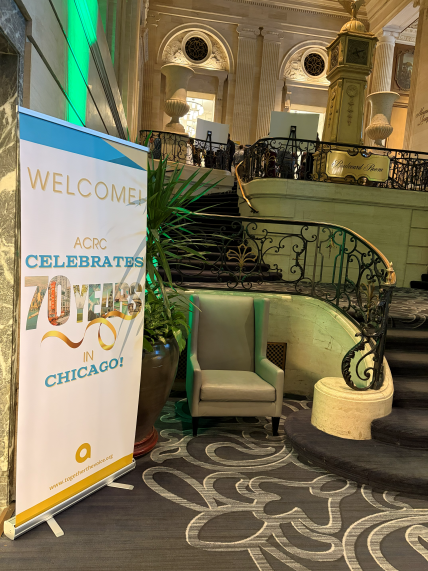
That question followed me to the Association of Children’s Residential and Community Services 70th Annual Conference in Chicago, where hundreds of child welfare leaders, professionals, and advocates came together to strengthen residential and community-based services for young people. With my focus on mentoring relationships for youth impacted by foster care, I left the week both energized and reflective. I was reminded that while research and systems evolve, relationships remain at the core of meaningful change.
Across plenaries and workshops, conversations explored some of the most pressing issues facing the field today from rapidly advancing technology, staff wellbeing, caregiver engagement, neurodiversity, and the importance of centering youth voice. Someone mentioned to me that being around so many people working to make a positive impact helped restore some of their faith in humanity. I felt that too, being in a space where hope was active.

Innovating with Intention
During the poster session, I found myself drawn to conversations about how collaboration is reshaping what’s possible for young people in care. One exchange that stayed with me was with West Cruz from Rising Ground, who described a partnership between his residential team and a local school district.
Rather than allowing a young person’s experience in residential care to exist separately from their experience at school, West’s model created a consistent flow of information between the two. With a dedicated school liaison and shared technology, teams could track day-to-day student wellbeing and respond in real time. The result was stronger engagement, better attendance, and more coordinated care.
What struck me was how intentionally this model addressed the fragmentation that’s often present between support systems. I’ve seen mentoring relationships be the glue between those fragmented parts countless times (and often informally). It reinforced for me that practical, coordinated efforts between providers can make all the difference.
Rising Tech (And its Limits)
In a standout workshop session on Best Practices in AI Implementation led by Dr. Dennis Morrison, a panel shared their experiences using automated solutions to reduce administrative burden in behavioral health systems. I was introduced to the concept of augmented intelligence: the technology designed to support, and not replace, human decision-making.
One idea from that session stayed with me:
Artificial intelligence does not equal artificial humanity.
As our field continues to explore new tools, this feels like an anchor. Technology can streamline processes, but it can’t replicate what it feels like for a young person to be seen, known, and valued by another human being.
In mentoring relationships where trust is built in small and often unstructured moments over time, that distinction feels especially important. While efficiency matters, connection is what makes the work meaningful.
Supporting Transitions Out of Care
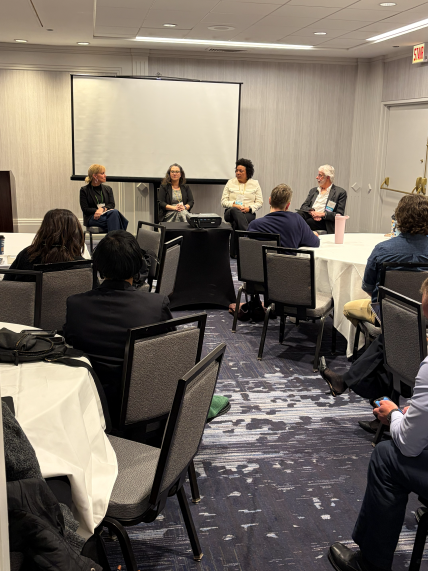
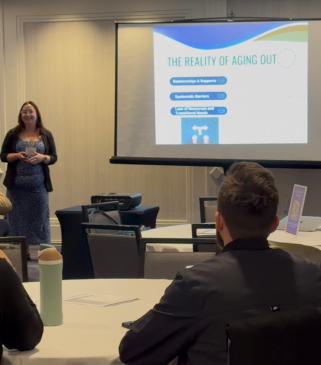
Another session that left an impression focused on young people aging out of foster care. Led by teams from NFI Massachusetts and Firefly Children and Family Alliance, it included an activity that asked us to reflect on our own readiness at age 18.
How comfortable were we at finding housing? Managing finances? Accessing healthcare?
It was a humbling exercise that revealed layers of unseen support many of us hadn’t fully recognized before. The session reinforced something I’ve seen time and again: that “independence” is often expected long before it’s fully supported.
What stood out most was the emphasis on lived experience (like Firefly’s Peer Navigators) and the importance of keeping young people in the driver’s seat of their own transitions while intentionally surrounding them with community. I thought more about mentoring not just as guidance, but as a steady presence during times that can otherwise feel uncertain and isolating.
Bridging Residential Care and Mentorship
One of the most meaningful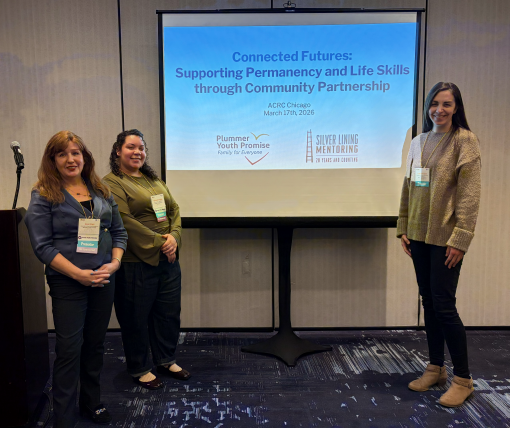 moments of the week for me was the opportunity to co-present alongside Plummer Youth Promise on cross-sector partnerships between residential care and mentoring.
What made the session especially powerful was the voice of lived experience. Attendees heard directly from a mentor and mentee who participated in our Learn & Earn life skills program and who, 4 years later, remain closely connected. Their story embodied our message that when mentoring-focused partnerships are built with intention, they can facilitate relationships that outlast any single program timeline.
In that room, I felt a strong sense of connection with others doing this work. There’s a growing movement to ensure that young people have not only the tools, but the relationships to navigate the complex and inevitable transitions that lie ahead.
Redefining What Quality Means
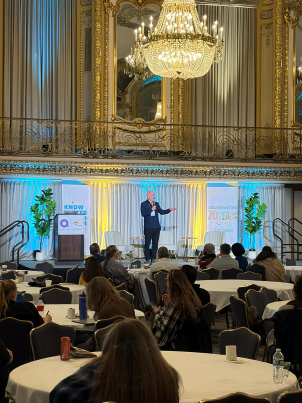
The conference closed with a keynote from Dr. Kiaras Gharabaghi that challenged me in a way I’m still sitting with.
He invited us to rethink how we define “quality” in our work – not just in terms of outcomes, but in terms of experience. Quality of life. Quality of care. Quality of everyday moments.
He grounded this in the fundamentals of sleep, food, play, learning, and community. At one point, he asked a question that was as simple as it was confronting: When was the last time we laid on the mattress we ask young people to sleep on, night after night?
It was a powerful reminder that what might seem like small details are actually central to how young people experience care. One idea from Dr. Gharabaghi continues to stick with me:
“You must explore access to community for young people that is beyond your organization.”
For young people impacted by foster care whose connections are often disrupted, this feels especially urgent. Mentoring can be a bridge not only to one relationship, but to broader networks, opportunities, and a deeper sense of community.
Moving Forward
I left the conference feeling both affirmed and challenged to think more expansively about how we define and deliver quality in our work. It was clear that we have an opportunity to be even more intentional about integrating relationships into every layer of care.
I’m grateful to the ACRC organizers for designing a conference that went beyond presentations and made space for some real reflection. The focus on quality as lived experience – not just outcomes – gave me a new perspective to carry into the work ahead.